“The tongue has the power of life and death, and those who love it will eat its fruit.” Proverbs 18:21 (NIV)
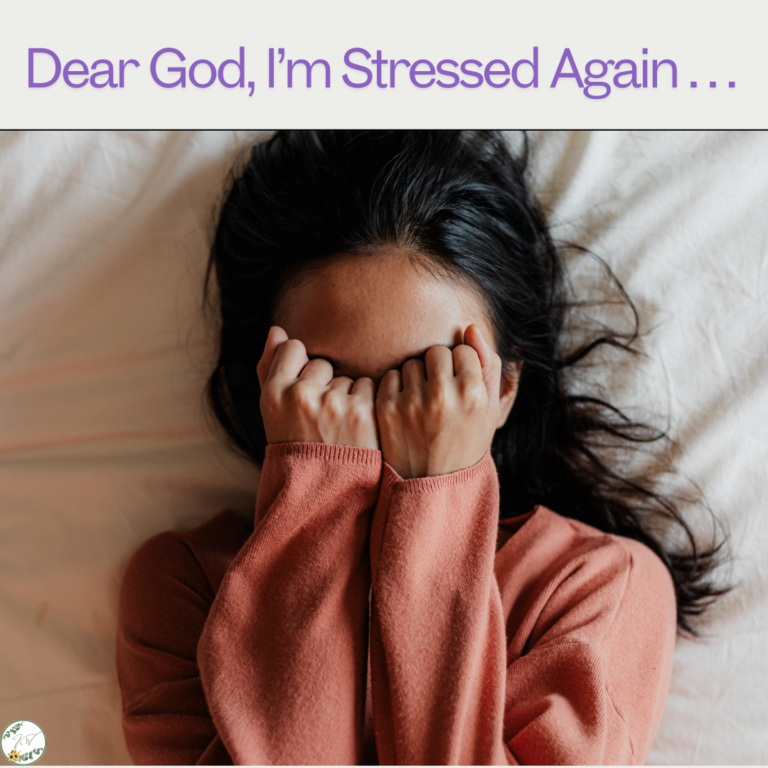
I catch myself doing it more often than I’d like to admit. Maybe you do, too. I speak negatively about myself. Sometimes I joke: “Oops, I did it again—I’m so clumsy!” Other times, it slips out in frustration: “I must be scatterbrained… maybe I’m just having a senior moment.” And then there are the moments when my words are not light or funny at all, but are unkind and disrespectful: “I’m so fat… ugly… stupid.”
But, dear one, our words matter. Scripture reminds us, “The tongue has the power of life and death, and those who love it will eat its fruit” (Proverbs 18:21, NIV). That truth doesn’t just apply to how we speak to others. It includes the words we speak over ourselves.
God never calls us clumsy, scatterbrained, or worthless. Instead, He calls us chosen, beloved, and fearfully and wonderfully made (Psalm 139:14).
Think about this: words are so powerful that God spoke creation into existence (Genesis 1:1-26). If His words brought light, life, and beauty into being, then surely the words we speak carry weight in shaping our hearts and renewing our minds.
Since our words have power, we must use them carefully and wisely. Negative words can plant seeds of discouragement, but words of truth and faith can build us up and align us with God’s purposes. As Hebrews reminds us, “By faith we understand that the universe was formed at God’s command, so that what is seen was not made out of what was visible” (Hebrews 11:3, NIV).
When we choose words that echo God’s truth, we partner with Him in speaking life into our circumstances, our relationships, and even our own souls.
Science even shows that words really do have power. Many harmful “unseen” things can be created by our negative self-talk, including:
- Increased Anxiety and Depression
- Low Self-Esteem
- Difficulty Enjoying Achievements
- Reduced Motivation
- Relationship Problems
And as if this isn’t bad enough, the enemy loves it when we put ourselves down because we are doing his job for him. He is thrilled that we are telling our lies about ourselves. But here’s the good news: we don’t have to agree with the enemy’s lies. We can choose to agree with God’s truth.
Yes, self-deprecating words may seem harmless, but they are lies if they contradict what God says about us. Jesus prayed, “Sanctify them by the truth; Your word is truth” (John 17:17).
God’s Word tells us who we really are in Christ. When the world, our own thoughts, or the enemy tries to label us with lies, we can stand firmly on the truth of Scripture. God says you are:
- Loved (Jeremiah 31:3, 1 John 4:10)
- Saved (Ephesians 2:8)
- Accepted (Romans 15:7)
- Forgiven (Ephesians 1:7)
- Free from condemnation (Romans 8:1)
- Redeemed (Galatians 3:13)
- Chosen (1 Peter 2:9)
- God’s masterpiece (Ephesians 2:10)
- A child of God (John 1:12)
- A friend of Jesus (John 15:15)
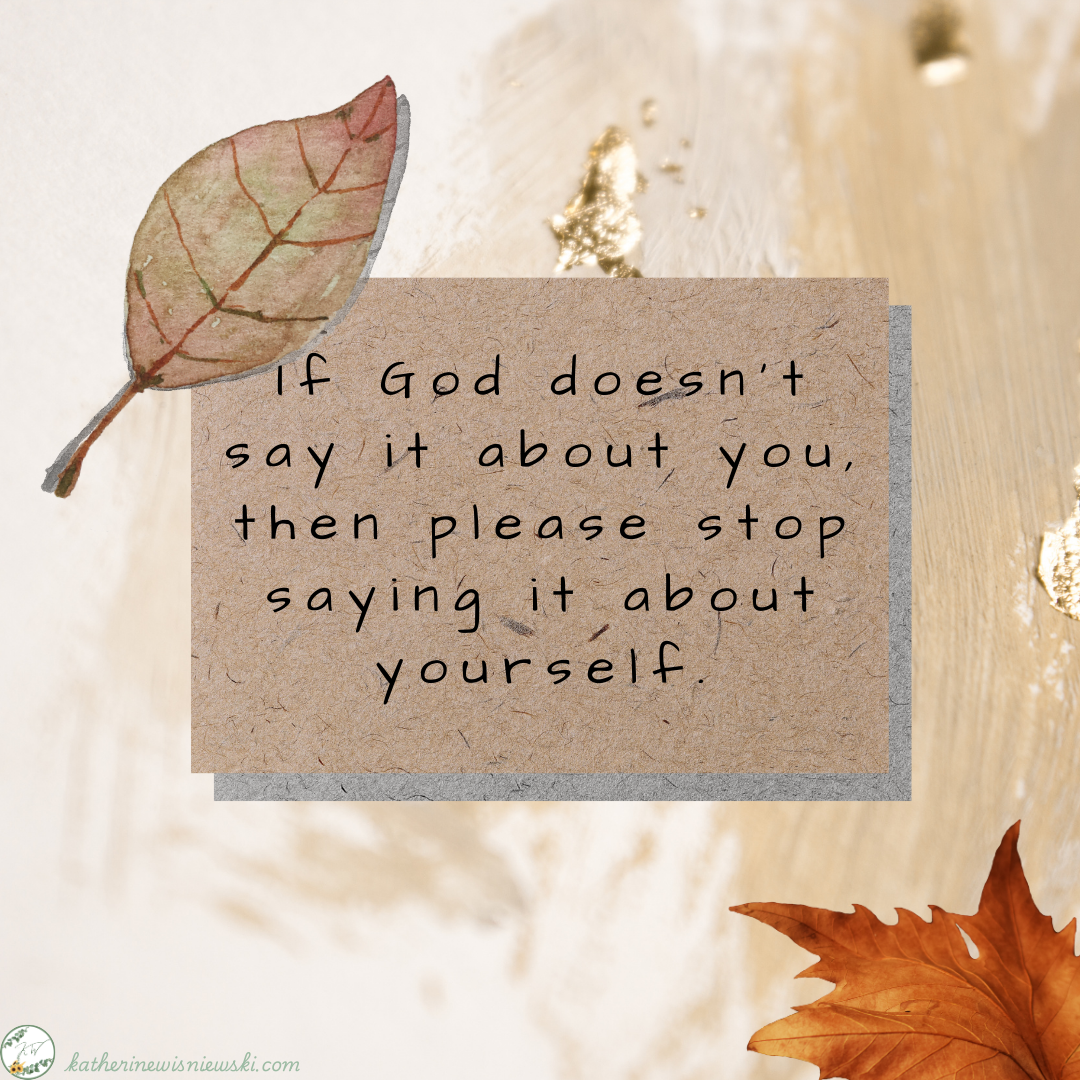
So, friend, because words have power, I implore you: If God doesn’t say it about you, then please stop saying it about yourself. Instead, pick one truth from this list and speak it over your life until it takes root in your heart.
Dear Heavenly Father, please forgive me for unintentionally telling lies about myself. Help me to recognize when I am doing so, and teach me to replace those lies with the truth of Your Word. Guard my heart and my mouth, Lord, that I may speak life, hope, and faith over myself and others. Thank You that in Christ I am loved, chosen, and redeemed. In Jesus’ name, Amen.
Read More About Your Identity In Christ
When You Know Your Identity But Don’t Act Accordingly