
Have you ever asked yourself, “Why do I do the things I don’t want to do? Unfortunately, for me, it became a recurring question. You see, I’d been a Christian for years, decades even. Yet when faced with conflict, I always had a Fight-or-Flight response. I got angry, defended myself verbally, or ran away from the situation or relationship.
When I analyzed my behavior, I realized I was comfortable avoiding dangerous situations. But I wasn’t okay with taking offense at other people’s words and actions and getting so angry that I said things I regretted. I also wasn’t okay with giving up on relationships because of conflict. I was tired of “taking my ball and going home” because it left me sad and lonely.
Even worse, I sometimes reacted this way when I wasn’t even in danger. My body responded to events or others’ words as if I were being attacked. And I knew my inappropriate response had ruined relationships and caused me undue anxiety. I also knew God wants us to love others. (John 13:34). Fighting or running away is not loving. But despite repeated prayers for forgiveness and help, my fight-or-flight reactions persisted.
The Science Behind the Fight-or-Fight Response
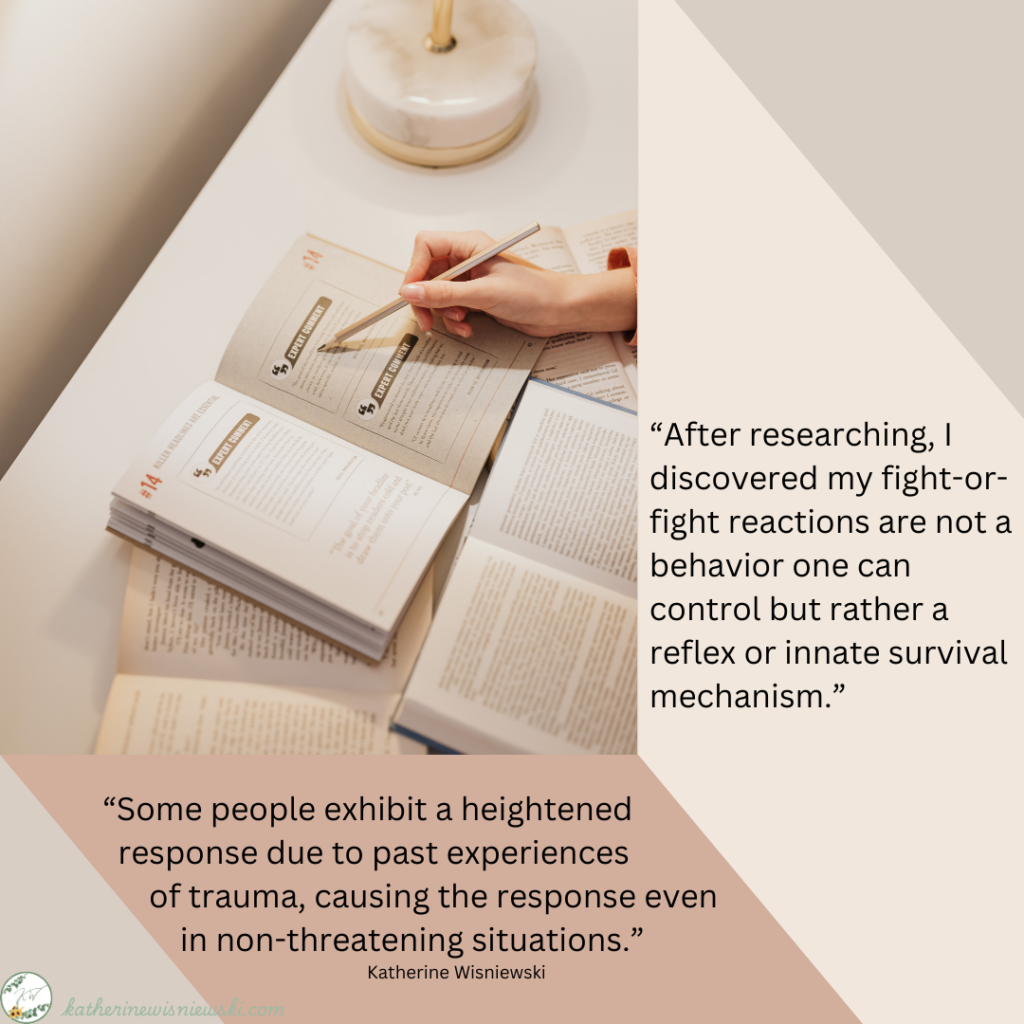
After researching, I discovered that my fight-or-flight reactions aren’t a behavior I can control but a reflex, an innate survival mechanism. Fight-or-flight responses occur in response to a perceived threat and are characterized by increased blood pressure, heart rate, and breathing rate.
“Fight” means defending oneself by fighting, yelling, or controlling one’s emotions. “Flight” involves the desire to run or flee from a situation or person. When our brain perceives a threat, we automatically react with one of these responses. However, some people exhibit a heightened response due to past experiences of trauma, causing the response even in non-threatening situations.
It Made Sense, But Didn’t Help
This scientific evidence made sense. You see, as a child, I survived abuse and lived with alcoholism. Learning that my fight-or-flight behaviors were innate, involuntary responses to my past trauma helped relieve me of the burden of feeling that my behavior was wrong. Still, it was not how I wanted to live my life.
Additionally, research also showed that overactivation of these four trauma responses can result in a decline in physical and psychological health. Chronic stress may contribute to high blood pressure, burnout, decreased immunity, and an increase in anxiety, depression, post-traumatic stress, and substance use problems.
Understanding only increased my problem.
Not Alone Nor Letting God Down
Friend, if you are right there with me, know that even Paul struggled with this. He wrote. “For I do not do the good I want to do, but the evil I do not want to do—this I keep on doing.” (Romans 7:19, NIV) Yet, Paul did not give up. If you keep reading, he said, “Thanks be to God, who delivers me through Jesus Christ our Lord!” (Romans 7:25, NIV).

Thanks be to God because “there is now no condemnation for those who are in Christ Jesus” (Romans 8:1, NIV). God sent Jesus to redeem us. That means Jesus traded His life for ours, paying the penalty for our sins and giving us His righteousness, holiness, and redemption (1 Corinthians 1:30). Therefore, it’s not possible to let God down or lose His love because Jesus paid for our mistakes.
Additionally, God already knows our weaknesses. God created us purposefully, just as we are. “For we are God’s handiwork, created in Christ Jesus to do good works, which God prepared in advance for us to do” (Ephesians 2:10, NIV). Thus, our weaknesses, or in this case, involuntary impulses, will not get in the way of God’s plan for our lives.
How to Combat the Fight-or-Flight Response
So, how do we calm an overdeveloped fight-or-flight reaction and live life loving others rather than responding as if they are enemies? The key is realizing that a heightened response is due to past traumatic events or abuse. In other words, it has resulted from evil in our world.
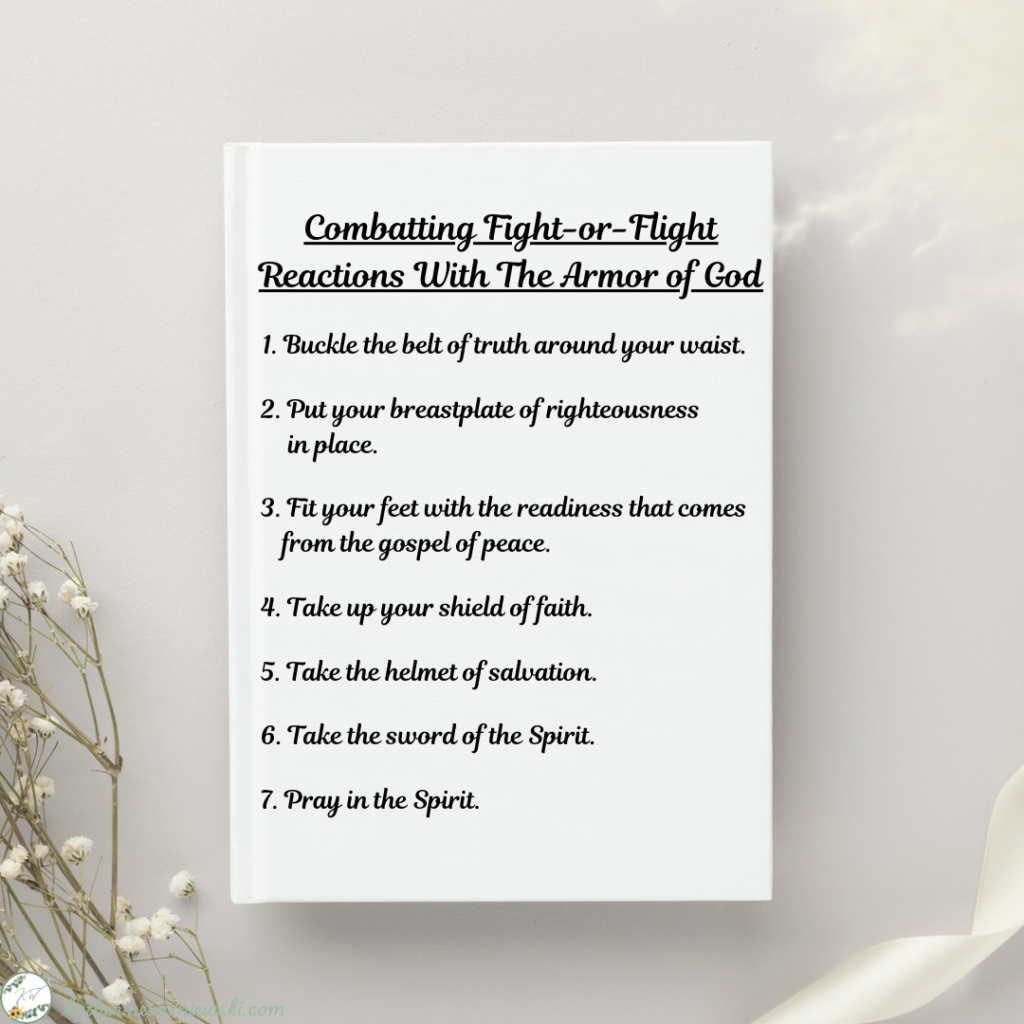
Therefore, we can counter our overactive fight-or-flight response by putting on the armor of God to combat evil (Ephesians 6:10-18). The scripture outlines seven practical steps to stand against the devil’s schemes. Coincidentally, they also align with advice from scientists and psychologists.
Combatting Fight-or-Flight Reactions With The Armor of God
1. Buckle the Belt of truth around your waist
In biblical times, a soldier first put on his belt. Then, he attached the rest of his armor to it. So, we must first put on God’s belt of truth by realizing that the enemy is “a liar and the father of lies” (John 8:44, NIV). He is a thief who “comes only to steal and kill and destroy” (John 10:10, NIV). He lies to distort a situation or someone’s words, so we feel attacked. This makes it hard to distinguish real danger from his deception.
Then, just as one buckles a belt around the waist, we surround our hearts and minds with God’s Word. God’s Word is truth (John 17:17), which will help us discern. We’ll be able to see the enemy’s deception. We will know he is distorting reality to get us to react inappropriately.
2. Put Your Breastplate of Righteousness in Place
Not only does Satan lie, but he tries to steal our self-worth by bringing up past failures and accusing us of being unworthy of God’s love and protection. When we put on our breastplate of righteousness, we protect our hearts against such attacks. We do that by remembering our identity in Christ.
Despite what burning arrows of accusation the enemy may hurl at our hearts, God loves us unconditionally (1 John 4:9-10). We are fully forgiven, holy, and blameless in God’s sight. And this is not because of anything we have done. It’s because of God’s grace and Jesus’ sacrifice. We are God’s beloved children (Ephesians 1:4-7). And we have Jesus’ righteousness (2 Corinthians 5:21 & Romans 3:22).
3. Fit your Feet with the Readiness that Comes from the Gospel of Peace
In ancient times, armies marched long distances over rugged terrain. So, just as a soldier readies himself for battle by putting on good shoes, we can prepare ourselves by putting on the gospel of peace.
We “fit” our feet with readiness and peace through prayer and gratitude. “Do not be anxious about anything, but in every situation, by prayer and petition, with thanksgiving, present your requests to God. And the peace of God, which transcends all understanding, will guard your hearts and your minds in Christ Jesus” (Philippians 4:6-7, NIV).
Finally, we “fit” ourselves with readiness and peace by preparing our body and mind for stress. We can get adequate sleep, stretch, and exercise. Exercise may help regulate our breathing, reduce muscle tension, and distract us from the cause of acute stress. Through deep breathing, relaxation exercises, and meditation on God’s truth and goodness (Philippians 4:8-9), we can calm our breathing, lower our heart rate, and reduce adrenaline.
4. Take Up Your Shield of Faith
Satan’s plan of evil has one purpose: to knock us down, immobilize us, and keep us from doing God’s will. We can defeat him only through faith, knowing God has a plan, no matter what we face. My shield of faith is based on this life verse: “And we know that in all things God works for the good of those who love him, who have been called according to his purpose” (Romans 8:28, NIV).
Friend, if Satan’s attacks have left you feeling broken and weakened your faith, you are not alone. Hebrews 11:1-40 lists all the weak and sinful people who trusted God’s promises and acted in faith. You can build up your faith by reading it. You will find that God uses the weak; the only requirement is faith in Him. And if you keep reading your Bible, you will find countless other stories where faith moved mountains.
Another way to build faith is to remember how God has worked in the past. Seeing how God held us through good times and bad, even when we made poor choices, will increase our trust in his love, power, and good plans. This will decrease our inappropriate response to fear, making it impossible for Satan to break through our shield and land a blow.
Lastly, just as ancient soldiers joined shields in battle for better protection, our shield of faith works best when we use it with others. Thus, we can surround ourselves with a sound support system of caring, trustworthy people. “Let us not give up meeting together, as some are in the habit of doing, but let us encourage one another” (Hebrews 10:25, NIV).
5. Take the Helmet of Salvation
Putting on the helmet of salvation means protecting our minds and fixing our thoughts on our eternal life through Christ. You see, most battles with the enemy emanate in our minds. He attempts to use our doubts and fears against us or make us fear death. So we can protect our minds by focusing on our salvation. “The LORD is my light and my salvation; whom shall I fear? The LORD is the strength of my life; of whom shall I be afraid?” (Psalm 27:1, NKJV).
6. Take the Sword of the Spirit
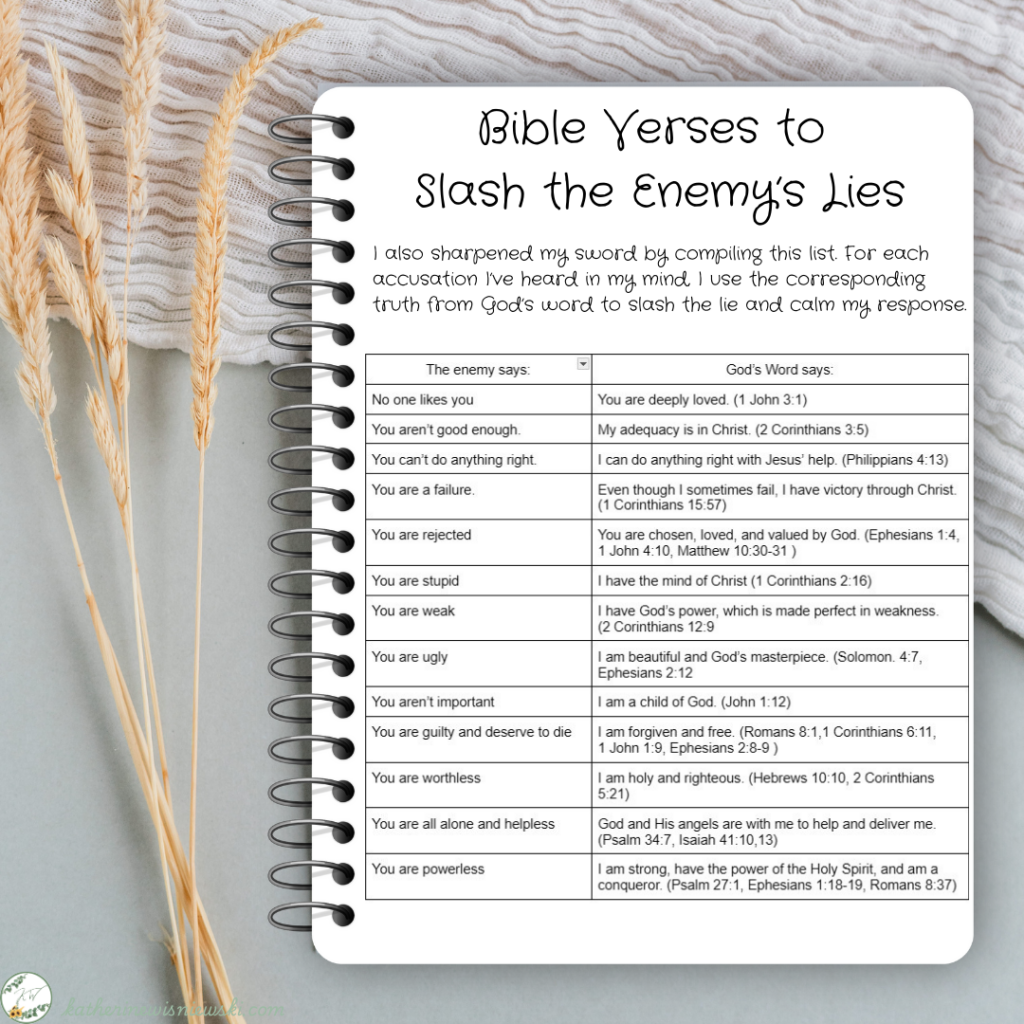
Using the Sword of the Spirit means using God’s word to protect our minds. “For the word of God is living and active, sharper than any two-edged sword, piercing to the division of soul and of spirit, of joints and of marrow, and discerning the thoughts and intentions of the heart.” (Hebrews 4:12, ESV).
Jesus demonstrated the power of using God’s Word to defeat the enemy when Satan tried to tempt him in the wilderness. Each time, Jesus defeated him by quoting Scripture. (Matthew 4:1-10) Furthermore, Jesus used specific scriptures that addressed the enemy’s specific lies.
In Psalm 91, David illustrates how to use God’s Word to fight all kinds of evil attacks. Despite every situation he listed, he reminds himself that God is his refuge. I read and meditate on it to help me combat my fight-or-flight response.
7. Pray in the Spirit
I have already mentioned prayer. But praying in the Spirit is different and more powerful. Praying in the Spirit means letting go of our human desires and efforts and praying in agreement with God’s will. Jesus taught us a simple way to do that in the Lord’s prayer when he said, “Your kingdom come, your will be done, on earth as it is in heaven“ (Matthew 6:10, NIV).
Praying in the Spirit is especially important in calming our fight-or-flight response. When we are about to panic, it is hard to know what to pray for. But the Bible tells us, “The Spirit helps us in our weakness. We do not know what we ought to pray for, but the Spirit himself intercedes for us through wordless groans” (Romans 8:26, NIV).
Take Away
A heightened fight-or-flight response is often the result of a traumatic past and is not a behavior one can control. However, we can calm our overactive reactions through prayer, study, meditation, and speaking Scripture as outlined in the armor of God. We can combine this with good self-care, breathing exercises, and a supportive network.
But even when we stumble and fall back into our fight-or-flight response, God will always be there, loving and catching us. “But you will not leave in haste or go in flight; for the LORD will go before you, the God of Israel will be your rear guard” (Isaiah 52:12, NIV).